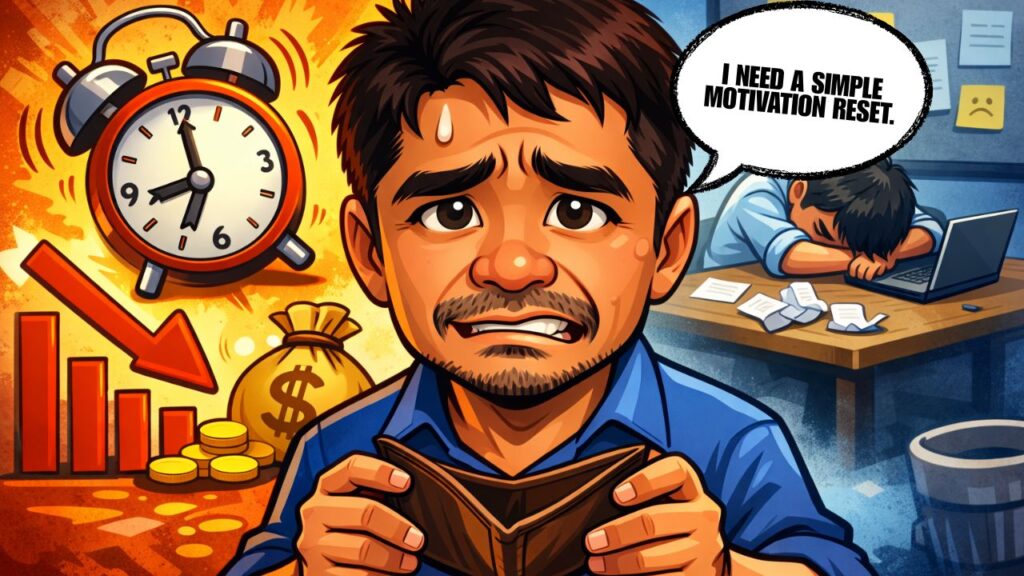
Low motivation looks harmless, but it quietly drains productivity, slows execution, and costs more than leaders admit. In this article, Jef Menguin shares practical frameworks to spot the real causes of low drive and fix the system, not just the symptoms. Read it and share it with your team so you rebuild energy, ownership, and results that last.
Ben did not look like a problem employee.
He logged in on time. He attended meetings. He answered when someone tagged him. When his manager asked, “How are things?” he would say, “All good,” and move on. If you only measured presence, you would think everything was fine.
But if you watched his work, you would notice a change.
Ben used to finish tasks early and still find time to improve them. Now he finished at the last minute and called it done. He used to speak up when something was unclear. Now he stayed quiet and waited for instructions. He used to bring ideas to the table. Now he mostly agreed and moved on.
Nothing was breaking yet.
But the energy was leaking.
Low motivation often starts like that. It doesn’t show up as rebellion. It shows up as dimming. The person is still there, but the drive that used to power their best work is not showing up as often.
First, Work Slows Down
When motivation drops, the first cost is speed.
People take longer to start. They delay small decisions. They move through tasks in smaller bursts. They need more reminders, not because they don’t understand, but because the internal push is weaker. Even simple work starts to feel heavy.
Then the second cost shows up: attention.
Low motivation makes people less careful. They stop checking details. They stop polishing drafts. They stop asking, “How can we do this better?” and start asking, “Is this enough?” The output still arrives, but it carries more mistakes, more loose ends, and more rework for someone else.
This is an important distinction for leaders.
Sometimes performance problems are skill problems. People don’t know how. They need training, coaching, or clearer expectations. But many times, the person knows how. They have done it well before. The real problem is energy and meaning, not competence.
Here’s a quick pause you can do now. Think of the last piece of work that disappointed you. Was it a lack of skill—or a lack of care?
Your answer changes what you do next.
Then the Costs Spread Beyond One Person
Low motivation rarely stays contained.
When one person slows down, the work doesn’t disappear. Someone else carries it. Teammates fill gaps, fix errors, chase updates, and pick up tasks that should not be theirs. At first, people call it teamwork. Over time, it becomes quiet resentment. High performers start feeling punished for being reliable.
Then you see the bigger signs.
Absences increase. Tardiness shows up more often. People stop volunteering. They avoid hard tasks. They withdraw in meetings. Some start checking job posts. Others stay, but their morale drops, and the whole team feels heavier than it should.
This is why I take motivation seriously when I help organizations with business strategy. Strategy depends on execution, and execution depends on people bringing enough energy to do more than survive the day. When motivation stays low, plans move slower, quality drops, and teams become reactive instead of proactive.
Before we continue, do one small action. Write the name of one person you lead—or work with—who used to have more spark than they have today. Don’t judge them. Just notice. Seeing clearly is the first move leaders make before they try to fix anything.
Low Motivation Is Not Just a Feeling. It’s a Signal.
When leaders hear “low motivation,” they often think it’s personal.
They assume the person is lazy. Or ungrateful. Or simply not ambitious. That mindset is tempting because it makes the problem feel simple: “Fix the attitude.” “Push harder.” “Give a pep talk.”
But motivation is rarely that shallow.
Motivation is fuel. When fuel runs low, something is usually happening in the system. The work may be unclear. The goals may keep changing. The person may feel ignored. The workload may be heavy without relief. The role may no longer fit. The team may not feel safe. The person may be carrying stress outside work.
Low motivation is not always a character issue.
Often, it’s a system signal.
In business strategy work, this is familiar. When execution slows down, the issue is rarely “people don’t care.” The issue is often that the system is making it hard to care. Conflicting priorities, unclear decisions, weak accountability, or work that feels meaningless will drain even strong performers over time.
So the question changes.
Not “What’s wrong with this person?”
But “What in our environment is making good effort hard to sustain?”
From “Motivate People” to “Design Conditions”
Most leaders try to increase motivation by adding pressure.
More reminders. More monitoring. More meetings. More urgency. More “We need to step up.” Sometimes it works for a week. Then it creates fatigue. People comply, but they don’t commit. They do the minimum to avoid trouble. The spark doesn’t return.
The shift is simple:
From trying to motivate people → to designing conditions where motivation can return.
This is what good leaders do. They remove friction. They make priorities clear. They reduce pointless work. They give people a sense of progress. They create ownership. They recognize effort that matters. They fix roles that don’t fit.
In strategy terms, leaders don’t “push execution.” They build an execution system. They create rhythm, clarity, and feedback loops. Motivation often rises when people can see what matters and feel that their effort leads somewhere.
Motivation grows when work makes sense.
The Real Costs: Performance, People, and Culture
Low motivation doesn’t only affect one person’s output. It creates costs that spread through the organization.
The first costs are performance costs. Work slows down, quality drops, and rework increases. The team spends more time fixing problems than moving forward. Deadlines slip, not because everyone is incapable, but because energy is inconsistent and follow-through becomes unreliable.
Then the people costs show up. Attendance issues rise. People check out emotionally. Some leave. Those who stay feel drained. Leaders spend more time chasing updates and less time leading. The team loses momentum, and even simple work starts to feel heavy.
Finally, the culture costs appear. Collaboration weakens. Trust erodes. Creativity dries up. People stop suggesting ideas because they don’t believe anything will change. The team becomes reactive—always responding, rarely improving. This is the most expensive outcome because it makes every future initiative harder to execute.
If you’re leading a team, this is worth a pause.
Which cost are you seeing right now: performance, people, or culture?
You don’t need to fix everything today. But you do need to name what’s happening, because what you name is what you can change.
What Leaders Often Do That Makes It Worse
When motivation drops, leaders get nervous. That’s normal. Work still has to get done, and the stakes are real.
So many leaders respond with pressure.
They add more check-ins. They ask for more updates. They tighten control. They watch closely. They repeat the same reminders. They use urgency as a tool: “We can’t afford delays.” “This is non-negotiable.” “Let’s push.”
For a short time, this can create movement.
But pressure has a cost. It teaches people to protect themselves. They stop taking initiative because initiative becomes risky. They stop experimenting because experiments can fail. They stop sharing problems early because they don’t want to be blamed. Over time, you get compliance without ownership.
I’ve seen this in strategy execution, too. When leaders panic, they try to force results through monitoring. But the more the system relies on chasing people, the less the organization learns. Work becomes a cycle of stress, short-term fixes, and repeat problems.
Pressure can move people.
It rarely restores motivation.
Motivation returns when people feel clarity, progress, and trust.
What Actually Works: A Simple Motivation Reset
If low motivation is often a system signal, then the fix is often a system adjustment.
Not a speech. Not a slogan. Not a “team building day” that disappears after Monday. A small reset in the conditions where people do their work.
Here’s a simple reset you can run in weekly 1:1s. It works because it hits the common drains without turning the conversation into therapy.
Start with clarity. Ask: “What does good look like this week?” Many people lose motivation when expectations feel foggy or constantly changing.
Then go to progress. Ask: “What would be a small win by Friday?” Progress fuels motivation. Stagnation kills it.
Next is ownership. Ask: “What part of this do you control?” People feel motivated when they can steer something, even if it’s small.
Then recognition. Ask: “What effort should be noticed?” This is not about praise as sugar. It’s about signaling what matters.
Finally, fit. Ask: “Is this work still the right work for you?” Sometimes motivation drops because the role is wrong, or the person has outgrown it, or the work has drifted away from their strengths.
This reset doesn’t fix everything. But it often reveals the real cause—so you stop guessing.
The 5-Minute Motivation Check You Can Reuse
If you want a tool you can screenshot and use every week, use this.
The 5-Minute Motivation Check
- Clarity: What is the one outcome that matters most this week?
- Friction: What is making this harder than it should be?
- Progress: What is one small win you can finish by Friday?
- Support: What do you need from me to do your best work?
- Energy: What is draining you right now—inside or outside work?
You don’t need to ask all five every time. But even asking two or three can change the tone of work. It tells the person: “I’m not here just to demand output. I’m here to remove barriers so you can perform.”
That is leadership.
That is also good strategy execution—because the fastest path to results is not more pressure, but better conditions for consistent performance.